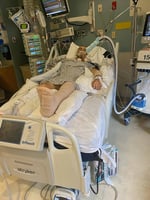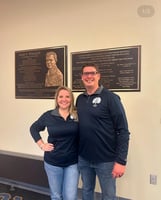
A neurologist at Geisinger Medical Center gave Tim Chiarolanza's wife and father the prognosis in...
In November 2021, a Guthrie Air helicopter carried Tim Chiarolanza from UPMC Williamsport Hospital to Geisinger Medical Center in Danville with a ruptured aorta, a separated pelvis, compound fractures and swelling in his brain. The flight lasted minutes. The recovery that followed has lasted years, and four years after the accident Tim describes himself as about 85% recovered.
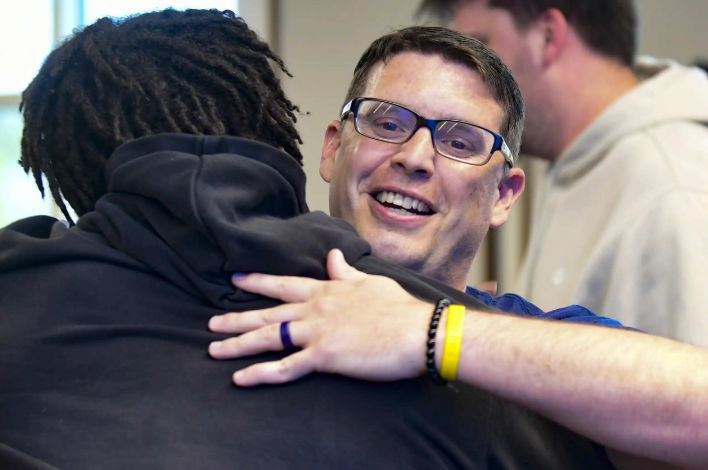
Tim Chiarolanza with a friend during his recovery.
That timeline is typical of serious injuries. According to the Centers for Disease Control and Prevention, people with a moderate or severe traumatic brain injury may have long-term or lifelong effects and often need ongoing care such as rehabilitation. The bills follow the same calendar. Below are the main places Pennsylvania families turn to cover them.
Start inside the hospital
Federal tax law requires nonprofit hospitals to adopt a written financial assistance policy that explains who qualifies for free or discounted care and how to apply. Geisinger, which treated Tim, publishes its financial assistance program and application on its website, as most large health systems do.
Families should ask for a financial counselor and a case manager by name before discharge, and again at each rehabilitation facility, and should request the facility's financial assistance application in writing.
Pennsylvania's Head Injury Program
For traumatic brain injuries, the state's main resource is the Department of Health's Head Injury Program, which funds services through contracted providers to help survivors live independently at home and in their communities. Applicants must be U.S. citizens and Pennsylvania residents at the time of the injury and the application, must have been injured after July 2, 1985, must meet income guidelines and must have exhausted other resources for head injury care. A minimum age also applies, and published listings put it at 18 or 21, so families should confirm with the state.
Families can begin by calling 1-866-412-4755. An enrollment specialist mails an application, and a pre-enrollment assistance coordinator helps complete it. The Brain Injury Association of Pennsylvania also provides pre-enrollment assistance, and its toll-free Brain Injury Resource Line, 1-800-444-6443, can point families to other programs.
Income when work stops
The Social Security Administration pays disability benefits through two programs, Social Security Disability Insurance and Supplemental Security Income, for people who cannot work because of a medical condition expected to last at least a year or to result in death. Applications require extensive medical documentation, so families benefit from collecting records from every hospital and therapist early in the process.
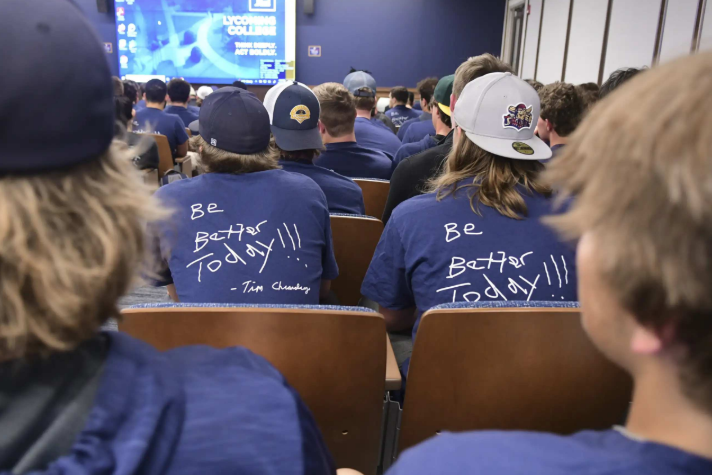
Supporters in Be Better Today shirts.
The community fills the gap
Tim's own support network extended far past his family. Friends organized a GoFundMe campaign on his behalf, and in 2023 the Lycoming College football program sold T-shirts in his honor.
Community fundraisers tend to work best when they explain plainly what the money will pay for, post regular updates on the survivor's progress and enlist local teams, schools, businesses and congregations to share the campaign. Recovery costs often outlast the first wave of attention, so organizers should plan for a long campaign rather than a single push.
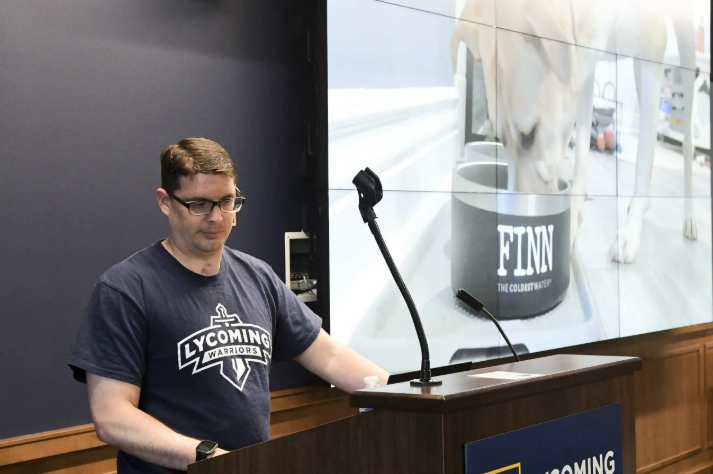
Tim Chiarolanza speaking about his recovery.
A nonprofit built for the long stretch
When Tim launched Triumph In Recovery in September 2024, he set out to build a program for TBI survivors that could provide referrals and financial support, and to make an annual donation to Susquehanna Regional EMS, which he credits with helping save his life. The Doylestown nonprofit supports survivors of traumatic brain injury, trauma and stroke, and their families, through education, rehabilitation information and community outreach.
That program is not running yet. Triumph In Recovery has its application ready and is working to raise the funding needed to begin offering referrals and financial support to survivors.
Every donation brings Triumph In Recovery closer to helping Bucks County families through the years after the hospital. Give at triumphinrecovery.com.
Keep reading
- Bucks County Has More Brain Injury Help Than Most Families Ever Find
- Ten Weeks to Home, Four Years to 85%: The Real Timeline of Brain Injury Recovery
- After a Brain Injury, the Family Joins the Care Team
- Given a 1% Chance to Live, a Former Lycoming Coach Built a Daily Practice Around Today
Sources
- Centers for Disease Control and Prevention, "Facts About TBI," updated August 4, 2025. https://www.cdc.gov/traumatic-brain-injury/data-research/facts-stats/index.html
- Internal Revenue Service, "Financial Assistance Policies (FAPs)." https://www.irs.gov/charities-non-profits/financial-assistance-policies-faps
- Geisinger, "Financial assistance." https://www.geisinger.org/patient-visitor-resources/billing-insurance/financial-assistance
- Pennsylvania Department of Health, "The Pennsylvania Head Injury Program (HIP): Information for Individuals." https://www.health.pa.gov/topics/Documents/Programs/Head%20Injury%20Program%20elig%20enroll%20contact.pdf
- PA 211, "Pennsylvania Department of Health, Rehabilitation Services." https://search.pa211.org/search/47756697-7bb6-5c7a-bef1-de6c20cf09bb
- Washington County Community Foundation, "Brain Injury Association of Pennsylvania." https://wccf.net/charities/brain-injury-association-of-pennsylvania
- Social Security Administration, "Disability Benefits." https://www.ssa.gov/disability